01
Makeup Tips
Eyeshadow placement, blending techniques, and common mistakes to avoid for a more open, lifted look.
Explore →
Eye Shape Guide
Understand your eye shape, master makeup techniques, and explore every treatment option — from Botox brow lifts to surgical solutions.
Explore the Site
Eyeshadow placement, blending techniques, and common mistakes to avoid for a more open, lifted look.
Explore →Winged liner, smudge prevention, and techniques that work with hooded lids to make eyes appear larger.
Explore →Non-surgical Botox brow lifts and surgical options including blepharoplasty, explained clearly.
Explore →Five false lash styles suited to hooded eyes, plus curler and mascara guidance for maximum lift.
Explore →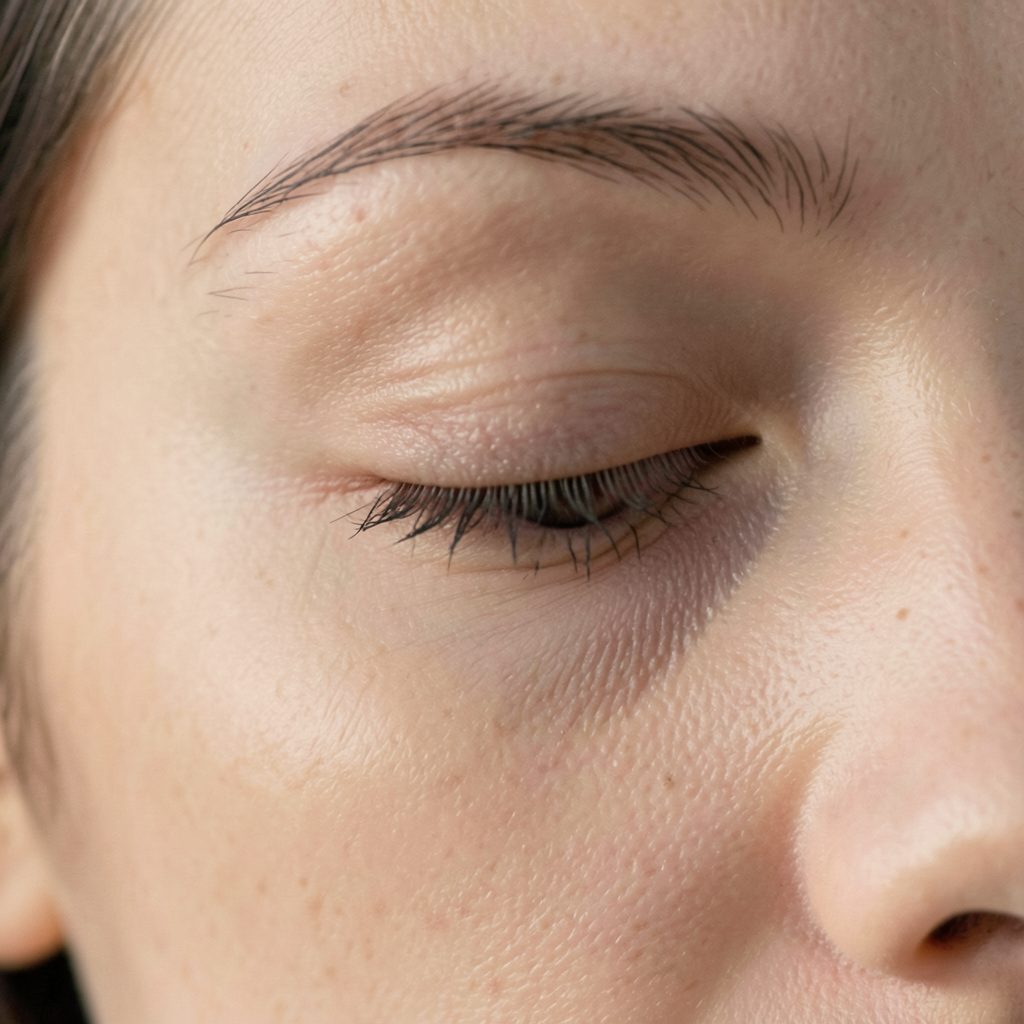
What Are Hooded Eyes?
Hooded eyes are a natural eye shape where an excess piece of skin from the brow bone partially or completely covers the eyelid. The result can make eyes appear smaller or more tired than they feel.
This shape can be present from birth due to genetics, or it can develop over time. Known causes include aging, genetic traits, eye rubbing, body fatness, muscle structure, trauma, solar radiation, and sleep apnea.
Hooded eyes describe a shape where a fold of skin drapes over the crease, often hiding much of the lid and leaving little visible space for eyeshadow. For many people this is simply inherited anatomy — a brow bone, a slightly lower-set crease, or gradual ageing that allows the skin above the eye to fall forward. But sometimes what looks like hooding is actually swelling, and that swelling can come from a reaction to pollen, dust, mould, or even ingredients in skincare. Sorting out the cause matters, because the way you apply makeup, choose an eye cream, or seek medical advice will all differ depending on whether your hooding is structural or allergy-driven.
In Australia, where spring brings ryegrass bursts across the southern capitals and the east coast regularly endures bushfire-affected summers, eye allergies are remarkably common. Roughly one in five Australians deals with allergic rhinitis at some point, and the delicate skin around the eyes often shows it first. If your lids have started looking heavier in recent years — or feel heavier at certain times of year — it is worth asking whether something more than ageing is at play. The clues are usually there once you know what to look for.
Structural hooding tends to be consistent day to day and stable across seasons. The lid fold sits in roughly the same place whether you have just woken up or are heading out at night, and the underlying bone structure and soft tissue distribution stay the same regardless of the weather. When you glance in the mirror at 7am, 1pm, and 9pm, the visible lid space does not dramatically change. Pressing gently above the brow does not reduce the apparent fold, because the tissue itself is not fluid-filled.
Allergy-driven swelling, by contrast, fluctuates. Puffiness tends to worsen after exposure to a trigger and improve when that trigger is removed. The skin above the eye may feel tight, slightly warm, or itchy, and the swelling often affects both eyes at once. Pressing the area lightly can leave a temporary indent, which is a hallmark sign of fluid retention rather than anatomical skin folds. If you have noticed that your eyes look "more hooded" on high-pollen days or after cleaning a dusty room, the pattern strongly suggests allergic involvement rather than fixed anatomy.
Different regions of Australia come with distinct allergen profiles. In Melbourne and parts of regional Victoria, ryegrass pollen peaks between October and December, and many residents notice eye symptoms alongside classic hay fever. Sydney's coastal suburbs deal with high humidity that encourages dust mites and mould spores, while Brisbane's subtropical climate extends allergy season almost year-round for sensitive individuals. Perth and Adelaide experience strong wattle (acacia) pollen counts in late winter and early spring, which can irritate eyes even in people who do not normally think of themselves as allergy-prone.
Beyond seasonal pollen, everyday exposures contribute too. Bushfire smoke, an unfortunate reality during the warmer months in NSW, Victoria, and South Australia, contains fine particles that irritate the eyes and provoke histamine release. Indoor triggers such as pet dander, dust in carpeted bedrooms, or fragrances in eye creams and makeup removers also generate swelling around the lids. Australians who travel between climates — say, from a Hobart winter to a tropical Cairns holiday — sometimes see a sudden change in their eye appearance simply because their environment has shifted so sharply and the body is reacting to new allergens.
A few symptoms are particularly useful for identifying allergy-related swelling, and they tend to appear together rather than in isolation. The list below covers the most reliable visual and sensory cues to watch for:
If several of those checkboxes are familiar, the likelihood that allergies are contributing to your perceived hooding climbs considerably. None of those signs typically appear with plain structural hooding, which is mostly a cosmetic concern without the itch or irritation. The more boxes you can tick, the more attention your sinuses and immune system deserve before any cosmetic work.
A simple observation routine can clarify things over a few weeks. Take a quick phone photo of your eyes in natural light first thing in the morning, then again in the late afternoon, and repeat across an entire month. Compare the visible lid space from image to image. With structural hooding the photos will look largely the same from week to week. With allergy involvement you will see obvious variation — heavier-looking lids on days when pollen counts spike or after you have spent time in a dusty environment, then a return to a leaner appearance once the exposure passes.
It is also worth tracking other body clues during the same period. Frequent sneezing, an itchy nose or throat, postnasal drip, and sinus pressure all sit on the same allergic pathway as eye swelling. If those symptoms rise and fall with your eye puffiness, the connection is harder to dismiss. Australians who already use over-the-counter antihistamines such as Claratyne or Zyrtec, available without prescription through Chemist Warehouse and other chemists, may notice that their eyes look more "open" on days when they have taken their medication — that is a strong practical signal of allergy involvement.
Once allergy involvement seems likely, a visit to a local GP is a sensible starting point. Australian general practitioners can arrange skin-prick or blood testing for common environmental allergens, often bulk-billed through Medicare. A referral to an immunologist or ophthalmologist may follow if symptoms persist despite basic management. For those with severe or treatment-resistant swelling, an oculoplastic surgeon can advise whether blepharoplasty is appropriate once the underlying allergic inflammation has been addressed — operating during a flare can lead to unpredictable healing and longer recovery.
Day-to-day management usually combines avoiding triggers, using preservative-free artificial tears to rinse irritants from the eye, and layering on a daily antihistamine during symptomatic periods. Cold compresses reduce swelling quickly, and sleeping slightly propped up can limit morning fluid pooling. Makeup choices matter too: waterproof, fragrance-free formulations are generally gentler on already reactive lids.
A few practical adjustments help during allergy flares without disrupting your routine:
When the lids look smoother, technique also matters. A soft wash of matte shadow through the crease paired with a precise dark line opens the eye area considerably. Readers who line their waterline will find it helpful to follow kohl and pencil liners suited to a downward-sloping lid, and anyone wanting to refine their shimmer placement can use highlighter placement tips to avoid amplifying the appearance of heaviness.
Working out whether your hooded appearance is structural, allergy-driven, or a combination of both is the first step toward feeling more in control of how your eyes look and feel. Start by tracking symptoms honestly across a full month, chat with a trusted GP about formal testing, and adjust your routine one small change at a time. The right blend of medical advice and beauty technique is usually all it takes to bring out the best in hooded eyes, no matter the cause.
Surgical Option
For those seeking a more lasting result, plastic surgery — including blepharoplasty — is covered as a treatment option for hooded eyes. Surgery addresses the excess skin directly and is considered an alternative to non-surgical approaches like Botox.
The site's surgery guide explains the procedure, what to expect, and how it compares to non-surgical routes, helping readers make informed decisions about their options.
Read the Surgery Guide →Famous Faces
Hooded eyes can enhance facial expressions and contribute to a distinctive, memorable look. These ten well-known figures all share the eye shape.
Jennifer Aniston
Leonardo DiCaprio
Solange Knowles
Taylor Swift
Michelle Williams
Robert Pattinson
Blake Lively
Selena Gomez
Gigi Hadid
Benicio del Toro
Side by Side
False Lash Guide
Varied length spikes create texture and the illusion of depth without weighing down the lid.
Longer outer-corner lashes draw the eye outward and upward, counteracting the hood effect.
A uniform, moderate length that adds definition without overwhelming a hooded lid.
Applied only to the outer half, these open up the eye shape and are easier to manage on hooded lids.
A strong upward curl (D or L curl) lifts lashes away from the hood, keeping them visible throughout the day.
The guide also covers lash curlers, mascara recommendations, and step-by-step instructions for fixing false lashes on hooded eyelids.
Full Lash Guide →Get in Touch
Whether you are just beginning your makeup journey or have been experimenting with different looks for years, we are glad you are here.
General Feedback
Share your thoughts on the site or suggest topics you'd like covered.
Looking for a Specific Tip?
Ask about a particular technique or eye-shape challenge.
Product Questions
Questions about products mentioned across the site.
Human Resources or Business Inquiries
Partnership, collaboration, or business-related correspondence.