01
Makeup Tips
Eyeshadow placement, blending techniques, and common mistakes to avoid for a more open, lifted look.
Explore →
Eye Shape Guide
Understand your eye shape, master makeup techniques, and explore every treatment option — from Botox brow lifts to surgical solutions.
Explore the Site
Eyeshadow placement, blending techniques, and common mistakes to avoid for a more open, lifted look.
Explore →Winged liner, smudge prevention, and techniques that work with hooded lids to make eyes appear larger.
Explore →Non-surgical Botox brow lifts and surgical options including blepharoplasty, explained clearly.
Explore →Five false lash styles suited to hooded eyes, plus curler and mascara guidance for maximum lift.
Explore →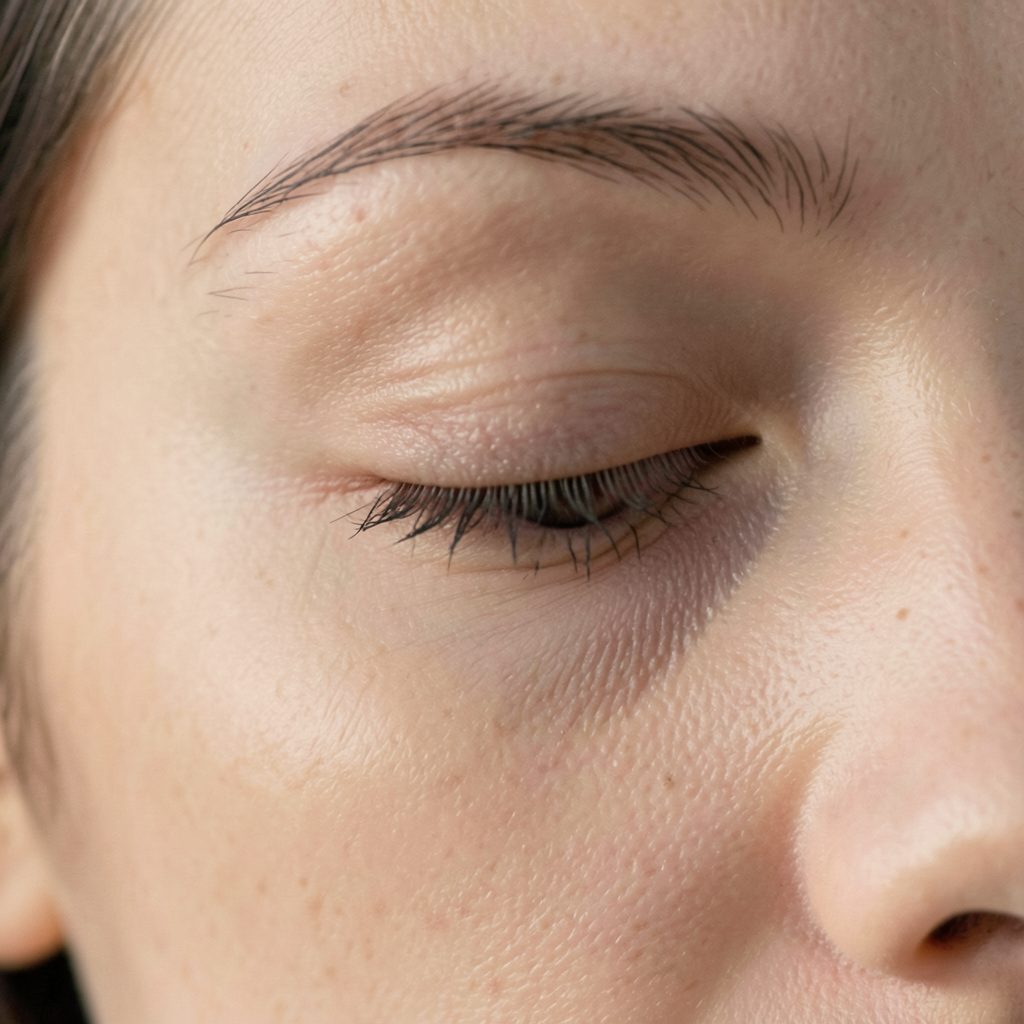
What Are Hooded Eyes?
Hooded eyes are a natural eye shape where an excess piece of skin from the brow bone partially or completely covers the eyelid. The result can make eyes appear smaller or more tired than they feel.
This shape can be present from birth due to genetics, or it can develop over time. Known causes include aging, genetic traits, eye rubbing, body fatness, muscle structure, trauma, solar radiation, and sleep apnea.
Hooded eyes are commonly recognised by a low or partly hidden upper-eyelid fold. The visible skin between the crease and lashes can look compressed, while eyebrow tissue may sit closer to the orbit. This shape can be inherited, develop through ageing, or combine both. It is an anatomical and cosmetic feature, not automatically a sign of disease.
Collagen is often presented as the missing ingredient in youthful skin, but its role in hooded eyelid ageing is more nuanced. Dermal collagen supports suppleness, yet hooding also depends on fat distribution, muscle movement, ligament support and sun exposure. This distinction helps readers choose realistic daily care, makeup and medical options.
The upper eyelid is more than loose skin. The levator aponeurosis lifts it, while the orbital septum, fat pads, orbicularis muscle and outer canthal tendon shape its contour. The hooded eye guide distinguishes eye shape, eyebrow position and the upper-lid fold, all of which affect how open the eyes look.
As tissue changes with age, the upper-lid crease may deepen or become partly hidden as fat and support structures shift. Some people retain a visible crease but develop fine lines; others show a smooth mobile lid with a heavier fold above it. A low crease, a heavy brow and true eyelid drooping are related visually but not identical.
Causes include genetics, natural ageing, sun damage, smoking and changes in bone or fat volume around the eye. Repeated eyebrow movement can add forehead lines that make the upper face look compressed. Sudden asymmetry, a new droop or a lid covering part of the pupil deserves medical assessment rather than a cosmetic workaround.
Most adult skin collagen is type I or III, while type IV helps anchor the epidermis to deeper tissue. With age, fibroblasts produce less collagen and existing fibres become fragmented and less organised; elastin also deteriorates. In the eyelids, this can reduce resilience and make thin crepey skin look less firm, although thin lid skin is normal.
| Upper-eyelid change | Main structural factors | Collagen connection | Typical appearance |
|---|---|---|---|
| Fine lines or crepey texture | Sun damage and a thinning dermis | Less organised collagen and elastic fibres | Tiny wrinkles and a rough-looking surface |
| Low or hidden crease | Fat and support shifts, anatomy and brow position | Indirect through tissue resilience | Smooth mobile lid with a heavier fold above it |
| Puffy upper lid | Redistributed fat, fluid and muscle | Supports the scaffold but does not determine swelling | Visible puffiness within the fold |
| Drooping lid margin | Levator weakness or ptosis | Usually secondary to the main mechanism | Lid or pupil partly covered, creating a tired gaze |
These patterns can overlap. Someone may have healthy collagen and still develop hooding because of orbital anatomy, while another may show photoaging without ptosis. Photographs, an examination and medical history tell more than an assumed collagen level or a generic age label.
Collagen loss is one part of photoaging. Ultraviolet radiation can increase matrix metalloproteinases, enzymes that break down collagen, and reduce repair. Glycation and oxidative stress add to stiffness. These processes affect the whole face, so a treatment that temporarily plumps one area does not necessarily restore the support network of the upper eyelid.
Australia makes sun protection a daily eyelid issue. In Brisbane, Perth and Sydney, the summer UV index can be extreme, while Melbourne may see very high UV despite changeable weather. A broad-spectrum SPF 50+ product, close-fitting sunglasses and a hat are more dependable than waiting until the air feels hot.
Apply sunscreen generously to the brow bone, orbital rim and upper lids before makeup, then reapply as directed and after sweating or wiping the face. Mineral formulas containing zinc oxide or titanium dioxide can suit sensitive skin, although fragrance can still irritate. The Therapeutic Goods Administration assesses sunscreen products and lists them on the Australian Register of Therapeutic Goods; a high SPF does not replace shade or protective clothing.
Everyday exposure also matters. Peak UV around lunchtime, reflective concrete, driving with sun on one side of the face and outdoor exercise all add cumulative exposure. Smoking accelerates dermal ageing, while rubbing the eyes and poor sleep can make temporary puffiness look worse. If you use a collagen powder or topical collagen product, check for an AUST L number; listing is not the same as pre-market approval or proof that it will lift a hooded lid.
No cosmetic can rebuild the support beneath a hooded upper lid, but small habits can improve comfort and make the visible area look more open. A protective, gentle and consistent routine is more useful than an aggressive one.
Protective daily habits
Retinoids can improve skin texture and fine lines over several months, but they do not restore the levator or tighten deep structural hooding. Start slowly, avoid direct eye contact and seek clinical advice for irritation or existing eye conditions. Retinoids should also be avoided during pregnancy. Caffeine may reduce temporary puffiness, but sleep, hydration and moisturising cannot reposition fat.
Makeup placement that keeps the lid visible
If the fold is very low, sharp cut creases and dense shimmer can make the eye appear smaller. Blend the edges towards the brow and choose contrast deliberately rather than attempting to paint a completely new crease. Waterproof makeup still needs thorough removal because trapped liner can irritate the lid and encourage rubbing.
Topical collagen mainly moisturises the skin’s surface, while studies of oral collagen have not isolated a specific benefit for hooded upper eyelids. A dermatologist may recommend retinoids, prescription skin treatments or other conservative measures when texture is the main concern. These options can improve the surrounding skin but are not substitutes for diagnosing ptosis.
Botox and other botulinum toxin brow treatments sometimes reduce forehead muscle pull, allowing the brows to rise slightly and making a mildly hooded lid look more open. Outcomes depend on brow position and eyelid mechanics; treatment can cause brow heaviness, reduced lid elevation or an unwanted change in smile. The changes described in hooded eyes after 40 show why injection plans should follow an examination rather than an age-based assumption.
Blepharoplasty is the operation most directly designed to alter a hooded upper lid. Depending on the anatomy, a surgeon may remove excess skin, reshape or reposition protruding fat, and reinforce the lid crease or support. It can create a clearer eye opening, but it does not reverse collagen loss throughout the face and cannot correct every form of ptosis. Upper blepharoplasty is also different from a brow lift, which targets the forehead and brow.
In Australia, cosmetic surgery and injectables operate within health and advertising regulation. Check that the doctor or nurse injector is registered with the Australian Health Practitioner Regulation Agency. Medicare generally does not rebate a procedure undertaken only for appearance, and private insurance commonly applies waiting periods and may contribute only when treatment is medically necessary.
Results vary with age, skin quality and the underlying cause. Injectables may last several months, while surgical results can remain apparent for years as ageing continues. Temporary swelling can initially make the eyelids look puffy, so progress photos are more useful during recovery than images taken in the first postoperative week.
Every intervention carries risks. Botox can cause headache, eyelid heaviness or unintended facial movement if placed poorly. Blepharoplasty can involve bleeding, infection, scarring, asymmetry, dry eye, incomplete blink, corneal exposure and persistent ptosis. Smoking, diabetes and poor healing can alter the risk profile, so medication, anaesthetic and recovery details should be discussed before consent.
Celebrity images provide context but not a diagnosis. Sarah Jessica Parker, Jennifer Garner and Zac Efron are often described in public commentary as having hooded or low-crease eyes, yet a red-carpet photograph cannot reveal brow-bone position, levator function or the effects of makeup. Side-by-side images are useful for understanding visible traits, but they cannot establish someone’s collagen level or predict an individual result.
Start by separating appearance from symptoms. Take a front-facing photograph in daylight and a side profile, note whether the lid has changed over several months, and record any irritation, headaches or visual obstruction. If one lid suddenly looks lower, the pupil is covered, or the change follows illness or a new medication, arrange medical review promptly.
For appearance-focused goals, a GP can coordinate an eye assessment, while an oculoplastic surgeon or qualified aesthetic practitioner can evaluate the lid and brow. Ask for the diagnosis, expected benefit, duration, total cost, recovery time and complication plan. In Australia, request an itemised quote and confirm any insurance exclusions before booking.
Use the knowledge of collagen and hooded-eye structure to choose one deliberate path: protect and moisturise, adapt the makeup, investigate a non-invasive option, or consider surgery after a full assessment. Explore the site’s practical guidance, take consistent progress photographs, and book the next appropriate appointment based on your anatomy and goals rather than a celebrity image or a collagen score.
Surgical Option
For those seeking a more lasting result, plastic surgery — including blepharoplasty — is covered as a treatment option for hooded eyes. Surgery addresses the excess skin directly and is considered an alternative to non-surgical approaches like Botox.
The site's surgery guide explains the procedure, what to expect, and how it compares to non-surgical routes, helping readers make informed decisions about their options.
Read the Surgery Guide →Famous Faces
Hooded eyes can enhance facial expressions and contribute to a distinctive, memorable look. These ten well-known figures all share the eye shape.
Jennifer Aniston
Leonardo DiCaprio
Solange Knowles
Taylor Swift
Michelle Williams
Robert Pattinson
Blake Lively
Selena Gomez
Gigi Hadid
Benicio del Toro
Side by Side
False Lash Guide
Varied length spikes create texture and the illusion of depth without weighing down the lid.
Longer outer-corner lashes draw the eye outward and upward, counteracting the hood effect.
A uniform, moderate length that adds definition without overwhelming a hooded lid.
Applied only to the outer half, these open up the eye shape and are easier to manage on hooded lids.
A strong upward curl (D or L curl) lifts lashes away from the hood, keeping them visible throughout the day.
The guide also covers lash curlers, mascara recommendations, and step-by-step instructions for fixing false lashes on hooded eyelids.
Full Lash Guide →Get in Touch
Whether you are just beginning your makeup journey or have been experimenting with different looks for years, we are glad you are here.
General Feedback
Share your thoughts on the site or suggest topics you'd like covered.
Looking for a Specific Tip?
Ask about a particular technique or eye-shape challenge.
Product Questions
Questions about products mentioned across the site.
Human Resources or Business Inquiries
Partnership, collaboration, or business-related correspondence.