01
Makeup Tips
Eyeshadow placement, blending techniques, and common mistakes to avoid for a more open, lifted look.
Explore →
Eye Shape Guide
Understand your eye shape, master makeup techniques, and explore every treatment option — from Botox brow lifts to surgical solutions.
Explore the Site
Eyeshadow placement, blending techniques, and common mistakes to avoid for a more open, lifted look.
Explore →Winged liner, smudge prevention, and techniques that work with hooded lids to make eyes appear larger.
Explore →Non-surgical Botox brow lifts and surgical options including blepharoplasty, explained clearly.
Explore →Five false lash styles suited to hooded eyes, plus curler and mascara guidance for maximum lift.
Explore →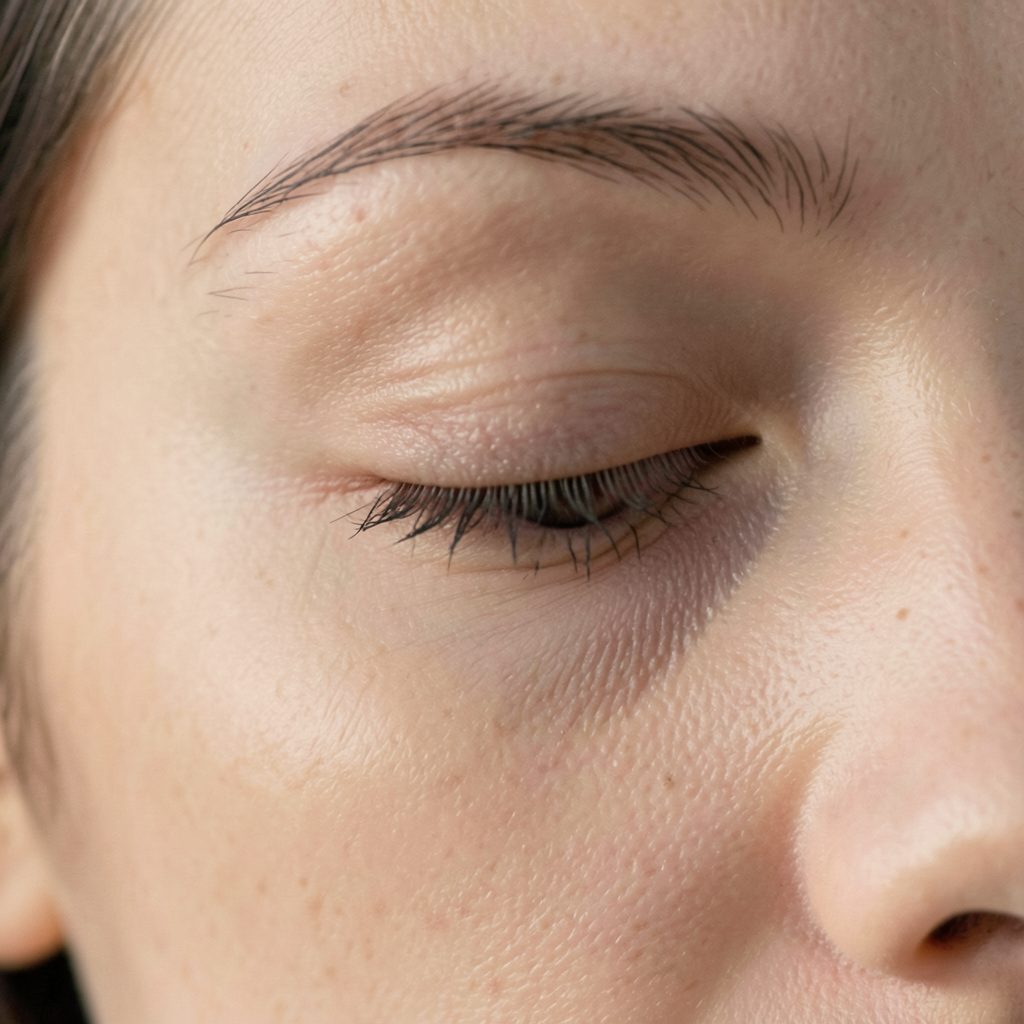
What Are Hooded Eyes?
Hooded eyes are a natural eye shape where an excess piece of skin from the brow bone partially or completely covers the eyelid. The result can make eyes appear smaller or more tired than they feel.
This shape can be present from birth due to genetics, or it can develop over time. Known causes include aging, genetic traits, eye rubbing, body fatness, muscle structure, trauma, solar radiation, and sleep apnea.
The levator palpebrae superioris is the main muscle that raises the upper eyelid. When it is shorter, less active or affected by nearby anatomy, the lid margin can sit lower and the upper lid may look hooded. A low crease or concealed eyelid fold does not automatically mean the muscle is weak, however; skin, brow position, fat and genetics all influence the appearance.
When people ask what exercises strengthen the levator muscle for mild hooded eyes, the key point is that there is no well-established home exercise proven to change adult levator anatomy. Gentle movements may train coordination and give you a better sense of lid control, but they should be treated as an optional movement routine rather than a substitute for an eye-health assessment.
Hooding can come from a naturally low brow, a drooping brow, excess upper-lid skin, changes in orbital fat, or mild ptosis, in which the upper lid sits lower than expected. The levator may function normally while nearby tissue hides the crease. Ageing can add several causes at once, but a sudden change deserves attention rather than an exercise trial.
A crease itself is not a muscle test. The levator lifts the lid margin; the orbicularis closes it, and the frontalis raises the brow. Repeatedly lifting the forehead or squeezing the eyelids may change the look without strengthening the intended muscle and can create tension around the eye.
An optometrist or ophthalmologist can check lid position, pupil reactions, eye movement and any neurological symptoms. This is particularly useful when one lid is lower than the other, the change developed over days, or there is double vision, pain, a small pupil or difficulty opening the eye.
Paediatric ophthalmologists sometimes prescribe specific lid-elevation or closing tasks for children with selected forms of ptosis or amblyopia. Those protocols are diagnosis-led and cannot simply be copied for adult cosmetic hooding. No reliable adult study has shown that a particular eyelid exercise thickens the levator or permanently raises a hooded lid.
The closest home drill to a targeted levator exercise is gentle resisted elevation. Sit upright in good light, rest a clean fingertip lightly above the brow bone, and keep it clear of the eyeball and movable lid. Raise the upper lid and brow towards the fingertip, meet light resistance, hold for three seconds, then release for three. Complete five slow repetitions without holding your breath or straining your forehead. The levator and brow muscles may share the effort, so this is not a clean isolation exercise.
A second low-risk movement is an upward-gaze hold. Keep your head level and focus on a fixed point above eye level for two to three seconds, then look back to a nearby neutral target. Five repetitions may practise coordinated levator use and visual focus, but this is an eye-movement exercise, not proven resistance training. A third option is to open the lid fully without wrinkling the brow, hold for two seconds, and close softly; forceful repeated closing mostly recruits the orbicularis.
If a clinician has not advised against movement, use the exercises on three non-consecutive days each week, with each session taking about two minutes. Consistency is more useful than force, and a comfortable range should be maintained. Skip the routine during an active eye infection, after eye surgery, or while wearing contact lenses.
Warm compresses can relax the skin before movement, while cool compresses may ease tenderness afterward. Keep hands clean, remove eye makeup, and do not push directly on the globe. Photograph both eyes in the same lighting every two weeks, but judge comfort and symmetry rather than expecting a new crease within days.
Stop if you develop pain, headache, dizziness, double vision, light sensitivity or increasing asymmetry. Do not use lid weights, suction devices, tape or online electrical trainers; they can bruise the lid, irritate the cornea or create pressure problems. If the hooding is worsening or affects vision, return for medical advice rather than increasing resistance.
Makeup can create visible balance without claiming to change muscle function. Curl the lashes gently, keep the upper-lid space well defined, and choose mascara that separates rather than clumps. Avoid pulling the lid downward to reach the roots, because that can create temporary ptosis and make a hooded crease look deeper.
For liner, follow the visible upper-lash line rather than drawing far above it. A practical reference is this hooded-eye eyeliner guide, which explains how placement interacts with a concealed mobile lid. Tightlining may disappear as the eye opens, so test the look in motion before using it for a full day.
In Australia, daily UV protection is an important part of long-term skin maintenance, especially in high-exposure cities and regions. A broad-spectrum SPF 50+ product, sunglasses and a hat help limit photo-ageing around the brow, although sun protection cannot reverse true levator weakness. Brow grooming may also frame the eye, but it should not tug repeatedly on the skin.
Movement is non-invasive and may help with awareness, while cosmetic procedures can alter brow position or remove excess tissue. The right choice depends on whether the cause is muscular, structural or mainly a normal variation, not simply on how pronounced the crease appears in a photograph.
| Approach | Intended effect | Evidence and limitations | Typical course |
|---|---|---|---|
| Gentle lid movement | Practise coordination | No proven structural change | Minutes, no recovery |
| Botox brow lift | Temporarily relax brow depressors | Does not strengthen the levator | Usually several months |
| Upper-lid blepharoplasty | Remove tissue or adjust lid position | Structural change for selected causes | Weeks to months of recovery |
If the eyelid margin overlaps the pupil, blocks peripheral vision, or has changed suddenly, medical assessment takes priority over makeup or exercise. For a mild, longstanding appearance with no visual symptoms, a conservative routine and cosmetic discussion are both reasonable paths.
Botulinum toxin injections may create a temporary brow lift by relaxing muscles that pull the brow down; they do not strengthen the levator. In Australia, cosmetic brow-lift injections are widely offered in Sydney, Melbourne, Brisbane and other metropolitan clinics. Check that the injector is AHPRA registered, ask which TGA-approved product is used, whether its use for brow elevation is on-label or off-label, and request the planned dose, total cost in Australian dollars and follow-up policy. Common temporary effects include eyelid heaviness, brow asymmetry, headache and double vision.
Upper-lid blepharoplasty is more involved because it can involve removing excess skin, reshaping tissue and repositioning the lid or levator attachment. Preparation includes an eye examination, a review of dry-eye disease, medications and previous surgery, plus a clear plan for ointment, swelling management and daily eye protection. Risks include infection, bleeding, scarring, persistent dry eye, incomplete closure, ectropion, ptosis and, rarely, changes to vision.
Medicare generally does not rebate a procedure undertaken only for appearance, and most private health policies exclude elective cosmetic blepharoplasty. A surgeon may sometimes assess a functional component, but eligibility and rebates are individual. Cosmetic consultations are also common in major Australian cities, so compare credentials and aftercare rather than choosing solely from a discount or social-media promotion.
If the movements are comfortable, use them as a low-risk way to monitor the eye area rather than as a promised correction. Makeup can remain part of the routine; when comparing liners, choosing eyeliner thickness can help match line weight to the amount of lid space you actually have.
A conservative movement routine
Questions to cover in a cosmetic consultation
Begin with a two-minute movement session only if it remains symptom-free, and use consistent photos to track your own result. If the appearance still concerns you, book an assessment with an optometrist, ophthalmologist or qualified cosmetic clinician, then choose the least invasive option suited to the cause.
Surgical Option
For those seeking a more lasting result, plastic surgery — including blepharoplasty — is covered as a treatment option for hooded eyes. Surgery addresses the excess skin directly and is considered an alternative to non-surgical approaches like Botox.
The site's surgery guide explains the procedure, what to expect, and how it compares to non-surgical routes, helping readers make informed decisions about their options.
Read the Surgery Guide →Famous Faces
Hooded eyes can enhance facial expressions and contribute to a distinctive, memorable look. These ten well-known figures all share the eye shape.
Jennifer Aniston
Leonardo DiCaprio
Solange Knowles
Taylor Swift
Michelle Williams
Robert Pattinson
Blake Lively
Selena Gomez
Gigi Hadid
Benicio del Toro
Side by Side
False Lash Guide
Varied length spikes create texture and the illusion of depth without weighing down the lid.
Longer outer-corner lashes draw the eye outward and upward, counteracting the hood effect.
A uniform, moderate length that adds definition without overwhelming a hooded lid.
Applied only to the outer half, these open up the eye shape and are easier to manage on hooded lids.
A strong upward curl (D or L curl) lifts lashes away from the hood, keeping them visible throughout the day.
The guide also covers lash curlers, mascara recommendations, and step-by-step instructions for fixing false lashes on hooded eyelids.
Full Lash Guide →Get in Touch
Whether you are just beginning your makeup journey or have been experimenting with different looks for years, we are glad you are here.
General Feedback
Share your thoughts on the site or suggest topics you'd like covered.
Looking for a Specific Tip?
Ask about a particular technique or eye-shape challenge.
Product Questions
Questions about products mentioned across the site.
Human Resources or Business Inquiries
Partnership, collaboration, or business-related correspondence.