Hooded Eyes vs Non-Hooded Eyes
A clear side-by-side comparison covering crease visibility, makeup techniques, how each eye shape ages, and the treatment paths available.
The Main Differences at a Glance
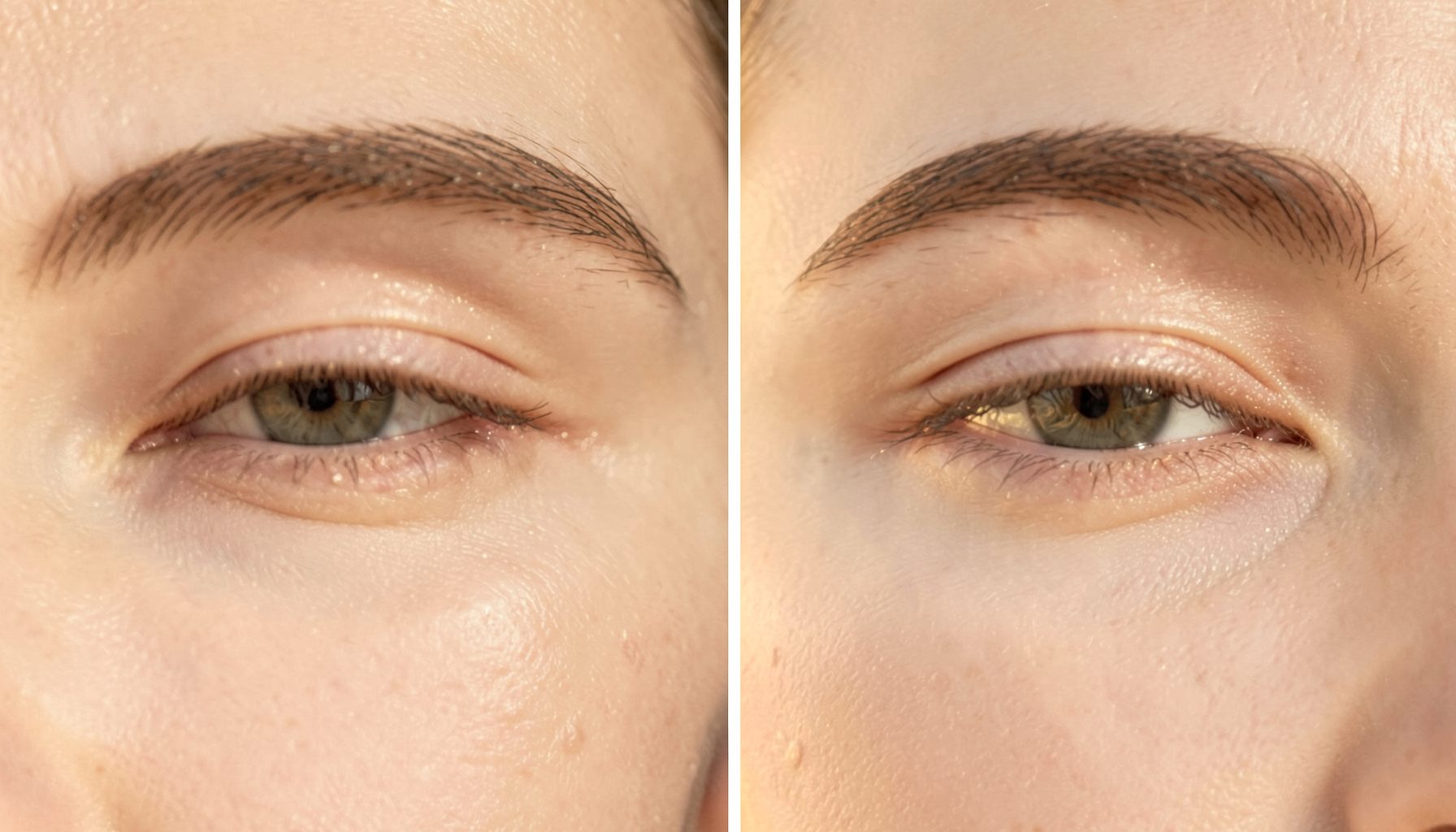
Hooded eyes and non-hooded eyes differ in one fundamental way: the visibility of the eyelid crease. With hooded eyes, excess skin from the brow bone drapes over the crease, partially or fully hiding it. Non-hooded eyes have a clearly defined, visible crease with the eyelid fully exposed beneath it.
This single anatomical difference ripples into every aspect of eye appearance — from how makeup sits on the lid to how the eyes change with age and which cosmetic treatments are most effective.
Hooded Eyes
The crease is partially or completely hidden beneath a fold of skin. The mobile eyelid may appear smaller or disappear entirely when the eyes are open. This can create a sultry, deep-set look but may also make the eyes appear smaller or tired.
Non-Hooded Eyes
The crease is fully visible and well-defined. The entire eyelid is exposed, giving a more open, awake appearance. Makeup has a larger canvas to work with, and the natural contour of the eye is easier to accentuate.
Appearance & Crease Visibility
In hooded eyes, the brow bone sits lower or carries more soft tissue, causing the skin to fold over the natural crease line. This can make the upper eyelid look flat or compressed. In non-hooded eyes, the brow bone sits higher and the skin folds neatly along the natural crease, leaving the lid space open and defined.
Hooded eyes can result from genetics, trauma, solar radiation, or even a previous eyelid surgery that did not heal as expected. Non-hooded eyes are simply the absence of that extra skin fold — the default anatomy where the crease remains unobstructed.
Makeup Techniques
The approach to eyeshadow, eyeliner, and mascara shifts significantly between the two eye shapes:
- Hooded eyes: Eyeshadow should be placed above the natural crease, blending upward and outward to create the illusion of a lifted lid. Eyeliner must be kept thin along the lash line to avoid consuming precious lid space. Winged liner requires a modified technique — drawing the wing with eyes open to map around the skin fold.
- Non-hooded eyes: The visible crease serves as a natural guide for eyeshadow placement. Both thin and bold liner styles work well, and winged liner can follow the natural lower-lash angle without interruption from a skin fold.
Effects on Eyes with Age
As skin loses elasticity over time, both eye shapes change — but in different ways. Hooded eyes may become more pronounced as the brow descends and the skin fold deepens, potentially reducing the visible lid even further. This can contribute to a tired or heavy appearance.
Non-hooded eyes may gradually develop a slight hood as the brow softens with age, but the crease typically remains more visible for longer. The aging trajectory is generally less dramatic, though both eye shapes benefit from skincare and sun protection to preserve skin firmness around the delicate eye area.
Treatment Approaches
For those who wish to address hooded eyes, several paths exist — ranging from non-invasive to surgical. Non-hooded eyes typically do not require corrective treatment, though general anti-aging care applies to both.
- Makeup techniques — strategic eyeshadow placement and liner styles can visually lift hooded eyes without any procedure.
- Botox brow lifts — a non-surgical option that relaxes the muscles pulling the brow down, lifting the eyelid area by a few millimeters.
- Plastic surgery — procedures such as blepharoplasty remove excess skin and tissue to restore a visible crease and more open eye appearance.